
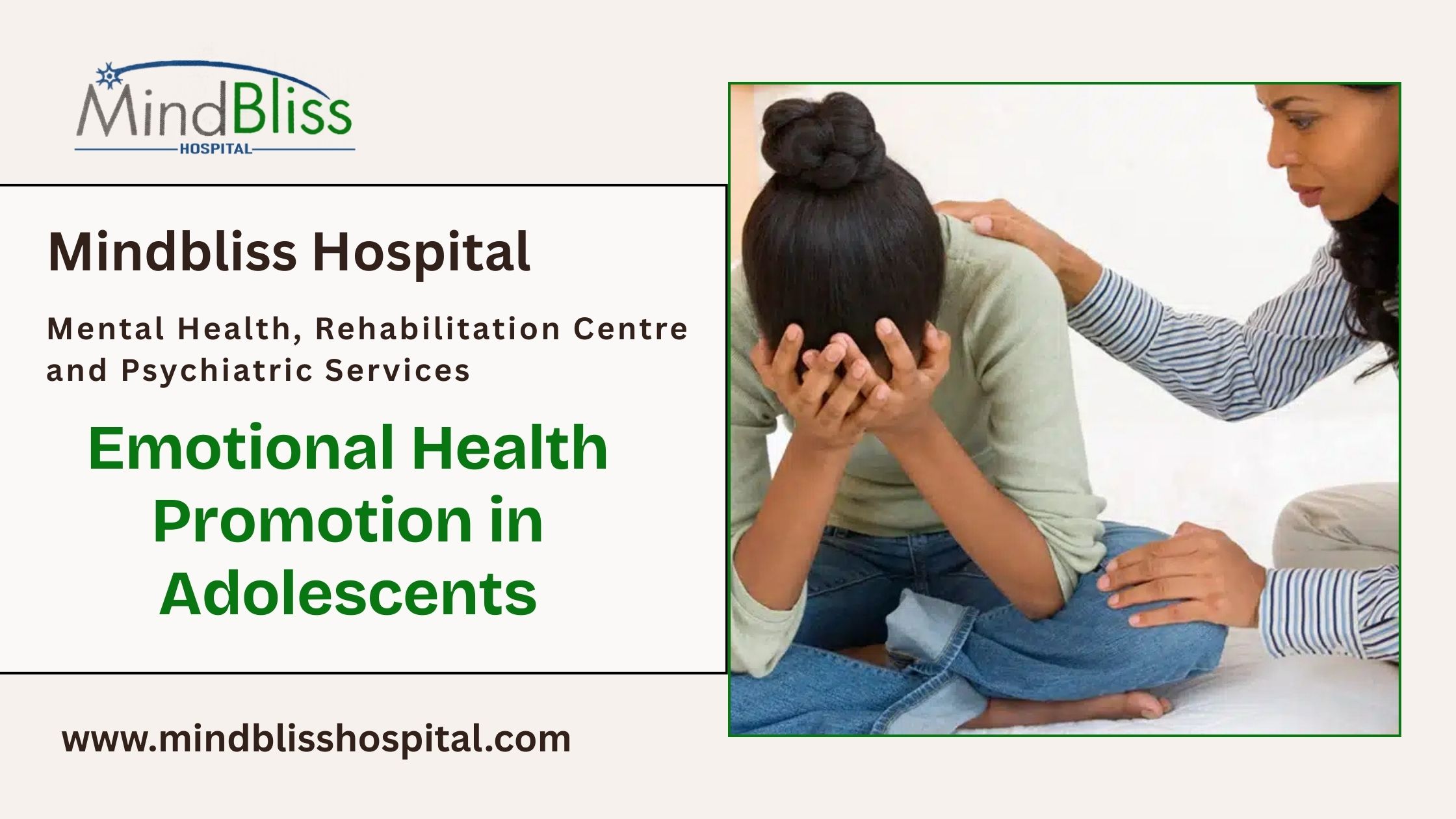
Emotional Health Promotion in Adolescents: A Complete Guide
Emotional Health Promotion in Adolescents
Adolescence is a powerful and life-shaping phase that marks the transition from childhood to adulthood. During these years, teenagers experience rapid physical, emotional, and psychological changes that influence their personality, mindset, and behaviour. With academic pressure increasing, social expectations growing, and exposure to digital platforms expanding, young minds often feel overwhelmed. This makes Emotional Health Promotion in Adolescents not only important but essential for their long-term well-being.
At Mindbliss Hospital, we understand the emotional challenges today’s teenagers face and work to support families with expert guidance and compassionate care.
Understanding Emotional Health Promotion in Adolescents
What Does Emotional Health Promotion Mean?
Emotional health promotion in adolescents involves creating an environment where teenagers can understand, manage, and express their emotions in healthy ways. It includes encouraging emotional awareness, developing coping skills, boosting self-esteem, and helping adolescents form strong relationships. Promoting emotional health means helping teenagers handle challenges, adapt to changes, and become more resilient as they move through important life milestones.
Why Adolescence Is Critical Stage
Adolescence is a time when the emotional part of the brain develops faster than the logical part. As a result, teenagers often make decisions based on emotions rather than reason. Hormonal changes cause mood swings, irritability, and heightened sensitivity. At the same time, social influences like peer pressure, online comparison, and academic expectations intensify emotional instability. Supporting emotional health during this stage is essential because it deeply influences academic performance, social life, behaviour, and mental stability in adulthood.
Common Emotional Health Challenges Among Adolescents
Academic Stress and Performance Pressure
One of the most common issues teenagers face is overwhelming academic pressure. Continuous exams, high expectations from parents, fear of failure, and the desire to compete often create intense stress. Many adolescents feel anxious about their future and worry about whether they will meet societal and family standards.
Peer Pressure and Social Influence
Peer acceptance plays a major role in an adolescent’s life. The desire to fit in can lead them to imitate behaviours they may not be comfortable with. This pressure can push them towards unhealthy habits such as substance use, excessive screen time, inappropriate relationships, or risky social behaviour. Navigating friendships becomes emotionally challenging during this age.
Body Image Concerns and Self-Esteem Issues
With social media showcasing unrealistic beauty standards, many teenagers become self-conscious about their body, appearance, and weight. Constant comparison lowers their confidence and creates long-lasting insecurities. Negative body image often leads to emotional distress, eating disorders, and withdrawal from social activities.
Hormonal Changes and Mood Swings
Hormonal fluctuations during puberty can cause sudden mood swings and emotional turbulence. Adolescents may experience unexplained anger, sadness, irritability, frustration, or sensitivity. These changes are natural, but without guidance, they can become difficult for teenagers to manage.
Identity Confusion and Emotional Conflicts
Teenagers explore their beliefs, preferences, interests, and values as they form their identity. This journey often brings emotional confusion, insecurity, and internal conflict. Adolescents may struggle to understand themselves or feel misunderstood by others, leading to emotional strain.
Family Disagreements and Communication Gaps
Family relationships become more complex during adolescence. Arguments, misunderstandings, and differences in opinion may increase as teenagers seek independence. A lack of open communication or emotional support at home can impact their mental stability.
Social Media Pressure and Online Stress
In today’s digital world, social media significantly influences adolescent emotions. Teenagers may feel pressured to look perfect, act a certain way, or gain approval from others online. Cyberbullying, online comparison, and excessive phone usage can negatively affect their emotional well-being.
Emotional Isolation and Loneliness
Despite being surrounded by people, many adolescents feel lonely or emotionally disconnected. They often struggle to express their worries, fear being judged, or believe no one understands them. This isolation can lead to anxiety and depression if not addressed early.
Importance of Emotional Health Promotion in Adolescents
Building Strong Self-Esteem and Confidence
Promoting emotional health helps teenagers develop a strong sense of identity and confidence. When adolescents learn to value themselves, they face challenges more confidently and make healthier choices.
Improving Academic and Social Performance
Emotionally healthy adolescents perform better academically because their minds are free from excessive stress. They also build stronger friendships and communicate more effectively, which enhances their social life and overall happiness.
Developing Resilience and Coping Skills
Emotional health promotion teaches adolescents how to cope with failure, rejection, criticism, and pressure. Resilient teenagers grow into emotionally stable adults who can manage life’s ups and downs without losing control.
Preventing Mental Health Disorders
Early emotional guidance reduces the risk of several mental health concerns such as anxiety, depression, panic issues, mood disorders, and behavioural problems. At Mindbliss Hospital, we have seen that timely support often prevents long-term complications.
How to Promote Emotional Health in Adolescents
Encouraging Open and Honest Communication
Teens need a safe space where they can express their worries without fear of judgement. Parents and teachers should listen carefully, avoid criticism, and maintain a supportive tone. Open conversations help adolescents feel understood and valued.
Teaching Healthy Emotional Expression
Teenagers must learn to name their emotions and express them in positive ways. Writing journals, talking to trusted adults, practising mindfulness, and discussing feelings openly can strengthen emotional stability.
Creating Supportive Home and School Environments
A stable, nurturing environment at home and school plays a major role in shaping emotional health. Respect, empathy, active listening, and understanding form the foundation of emotional strength in adolescents.
Encouraging Physical Activity and Healthy Habits
Regular exercise, balanced sleep, outdoor activities, and proper nutrition contribute directly to emotional well-being. Physical wellness and emotional wellness are deeply connected.
Helping Adolescents Build Social Skills
Positive social interactions help teenagers develop empathy, confidence, and communication skills. Encouraging group activities, hobbies, and friendships can improve emotional strength.
Limiting Screen Time and Managing Social Media
Monitoring digital habits helps reduce comparison, online stress, and cyberbullying. Encouraging teenagers to balance screen time with offline activities is essential for emotional balance.
Seeking Professional Support When Needed
If teenagers show signs of severe emotional distress, withdrawal, anxiety, or behavioural issues, early medical intervention is important. Mindbliss Hospital provides specialized adolescent mental health services, counselling, and therapy to guide families.
When Should Seek Professional Help?
Parents should consider seeking help if they see signs like continuous sadness, withdrawal from activities, sudden behaviour changes, aggression, academic decline, sleep issues, or loss of confidence. Early support strengthens emotional health and prevents long-term psychological challenges.
Conclusion
Emotional health promotion in adolescents is one of the most important responsibilities for parents, educators, and caregivers. Teenagers need understanding, support, and guidance to navigate the emotional complexities of their growing years. By creating a safe, stable, and encouraging environment, we can help them build confidence, resilience, and a positive sense of self. With the right support system and timely intervention, adolescents can grow into emotionally strong, mentally healthy, and successful adults.
At Mindbliss Hospital, we are committed to empowering families with the knowledge and resources needed to nurture emotionally healthy teenagers.