

10 Tips to Improve Your Mental Health
Improve Your Mental Health with Mindbliss Hospital
Mental health is just as important as physical health. In today’s fast-paced world, people often ignore their emotional and psychological well-being while managing work, relationships, responsibilities, and daily challenges. However, poor mental health can affect your mood, productivity, relationships, sleep, confidence, and even physical health.
At Mindbliss Hospital, we believe that taking care of your mental wellness is not a luxury—it is a necessity. Whether you are dealing with stress, anxiety, depression, emotional exhaustion, or simply want to feel happier and more balanced, improving your mental health should be your top priority.
In this in-depth guide, you will learn 10 effective and practical tips to strengthen your mental health, live a calmer life, and build emotional resilience.
Understanding Mental Health
Mental health refers to your emotional, psychological, and social well-being. It affects how you think, feel, and act. Good mental health helps you handle stress, manage relationships, make decisions, and live a meaningful life. Poor mental health creates constant worries, irritation, sadness, confusion, and fear.
Just like your body needs nutrition, your mind needs nourishment too—through rest, routine, connection, and healthy habits.
Why Taking Care of Mental Health Matters
Many people ignore their mental health until problems become severe. However, early care and proactive habits can prevent long-term struggles such as chronic anxiety, major depression, or burnout.
Good mental health helps you:
- Stay more focused
- Sleep better
- Manage emotions
- Build strong relationships
- Increase productivity
- Boost confidence
- Feel happier and calmer
- Improve physical health
- Make healthy decisions
Now, let’s explore the top 10 practical tips to improve your mental health.
1. Practice Mindfulness and Stay Present
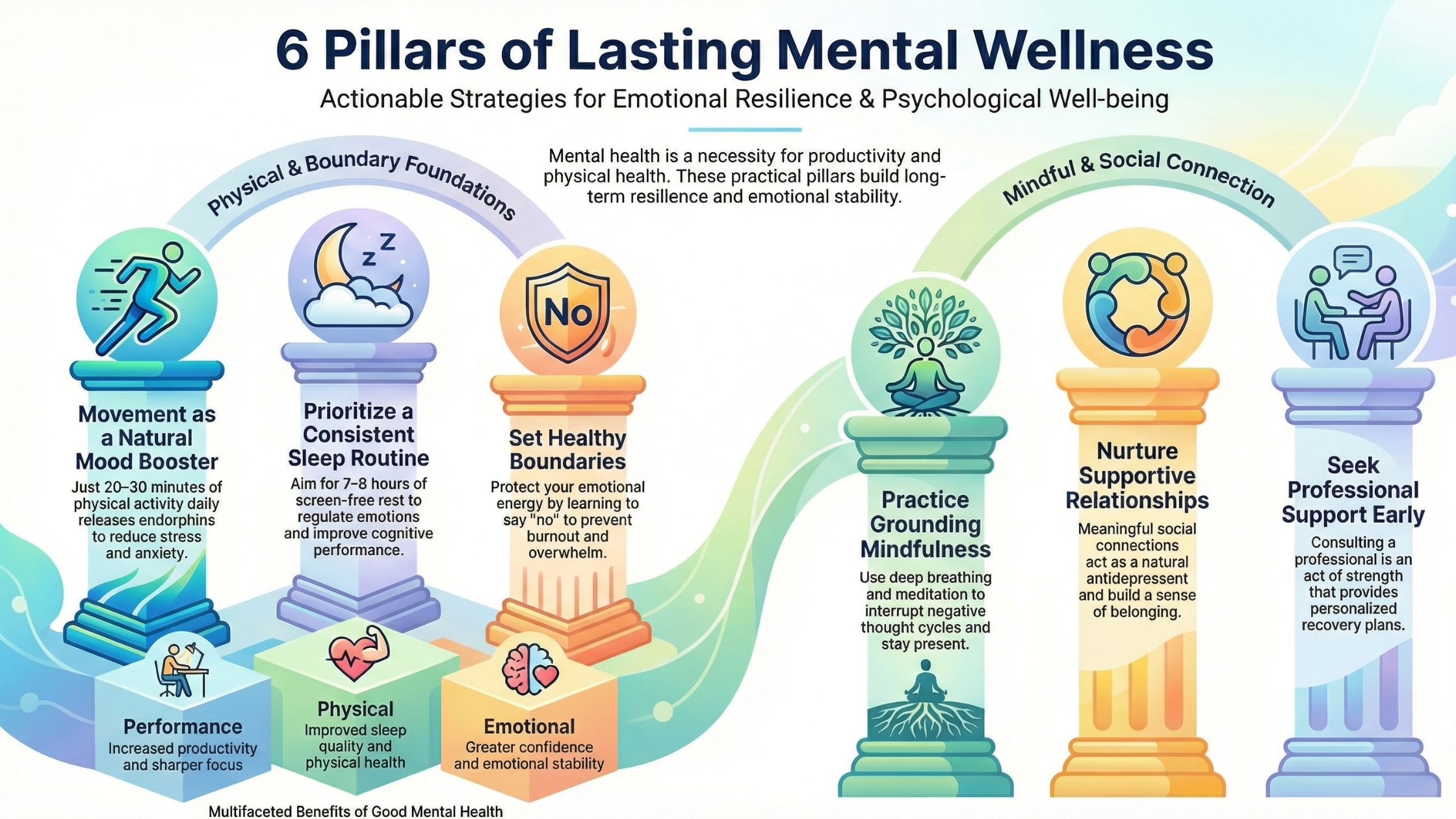
Mindfulness is the simple yet powerful practice of staying aware of the present moment without judgement. Instead of reacting quickly or allowing your mind to jump from one worry to another, mindfulness helps you slow down and regain control. When you stay present, it becomes easier to manage anxiety, overwhelming thoughts, and emotional stress.
Mindfulness supports your mental health by helping you stay calm in stressful moments, interrupting cycles of negative thinking, improving your concentration, reducing emotional reactivity, and strengthening self-awareness. You can incorporate mindfulness into your daily life through various gentle practices. Deep breathing exercises, for example, allow your mind to settle—just sit comfortably, close your eyes, and slowly inhale for four seconds, hold for two seconds, and exhale for six seconds.
Meditation is another effective method; even five to ten minutes a day can significantly lower stress levels. You can also try the body scan technique, where you mentally relax each part of your body from head to toe and notice how it feels. Mindful eating is equally helpful, as it encourages you to slow down and enjoy every bite instead of rushing through meals. With regular practice, mindfulness becomes an easy yet transformative habit that supports emotional and mental well-being.
2. Build Strong and Healthy Relationships
Humans naturally thrive on connection, and meaningful relationships play an important role in emotional well-being. When people lack supportive connections, it can lead to feelings of loneliness, sadness, and anxiety. On the other hand, nurturing healthy relationships provides emotional support, reduces stress, builds a sense of belonging, improves mood, and boosts confidence.
Investing time in people who truly care about you is essential. Whether it’s staying connected through calls, messages, or in-person interactions, communication helps you feel grounded. Sharing your thoughts and emotions with trusted friends or family can relieve mental pressure and help you feel understood. If you ever feel isolated, joining community groups, participating in hobby classes, or engaging in volunteer work is a great way to meet new people. Positive social interactions act as a natural antidepressant, helping your mind stay happier, more balanced, and emotionally stable.
3. Maintain a Balanced Lifestyle
Your daily habits play a large role in shaping your mental health. A balanced lifestyle helps your mind function at its best and reduces emotional stress. One of the most important aspects of balance is proper sleep. Getting seven to eight hours of sleep each night helps regulate your mood, manage stress, and improve emotional stability. Poor sleep, in contrast, increases irritability, anxiety, and difficulty concentrating.
Eating a nutritious diet is equally important. Consuming foods rich in proteins, healthy fats, fruits, vegetables, whole grains, and omega-3 fatty acids can significantly improve brain function and emotional wellness. Staying hydrated also supports mental clarity, as dehydration lowers energy levels and impacts mood. Limiting screen time—especially on social media—protects your mind from overstimulation and unnecessary stress. Another key part of a balanced lifestyle is setting healthy boundaries. Learning to say “no” when needed prevents burnout and keeps your mind relaxed. When you maintain a structured daily routine filled with healthy habits, your mental well-being improves naturally.
4. Stay Physically Active
Physical activity is one of the most powerful natural remedies for maintaining good mental health. Exercise triggers the release of endorphins, commonly known as “happy hormones,” which instantly boost your mood and energy levels. Regular movement helps reduce stress, ease symptoms of anxiety and depression, improve sleep, enhance memory and focus, and increase overall self-confidence.
Staying active doesn’t require a complicated workout or a gym membership. Simple activities like walking, jogging, cycling, dancing, yoga, stretching, or doing home workouts are enough to make a noticeable difference. Even dedicating 20–30 minutes a day to physical activity can significantly elevate your mental state. Consistency matters more than intensity, and small steps each day lead to long-term emotional and physical benefits.
5. Manage Stress Before It Manages You
Stress is a normal part of life, but when it becomes overwhelming or constant, it can negatively affect mental and physical health. Learning how to manage stress early prevents burnout and helps you stay emotionally balanced. Effective stress management begins with time management. Instead of trying to accomplish everything at once, divide your tasks and set clear priorities so your mind feels more organized.
Journaling is another powerful strategy. Writing down your emotions, thoughts, or worries helps clear mental clutter and provides emotional relief. Relaxation techniques—such as deep breathing, yoga, meditation, or progressive muscle relaxation—offer immediate calming effects. It’s also important to allow yourself guilt-free breaks throughout the day. Resting, even for a few minutes, enhances productivity and reduces mental exhaustion. Replacing negative self-talk with encouraging, compassionate words can also shift your mindset. Stress will always be part of life, but learning to manage it empowers you to live healthier and more peacefully.
6. Take Care of Your Emotional Health
Emotional wellness involves understanding, expressing, and managing your feelings in a healthy way. Many people suppress emotions out of fear or discomfort, but bottling up feelings can lead to increased anxiety, sadness, or emotional imbalance. Acknowledging your emotions is the first step. Accepting that it’s okay to feel upset, tired, angry, or overwhelmed helps you process emotions instead of fighting them.
Talking to someone you trust—a friend, family member, or therapist—creates emotional space and reduces internal pressure. Practicing gratitude is another simple yet powerful habit. Writing down two or three things you’re grateful for each day helps shift your focus toward positivity and reduces negative thinking. Identifying and limiting your emotional triggers can protect your mental state. Above all, treating yourself with kindness instead of criticism builds emotional strength. When you develop healthy emotional habits, you become more resilient and better equipped to handle life’s challenges.
7. Develop a Healthy Sleep Routine
Quality sleep is essential for good mental health. Your brain needs rest to regulate emotions, improve cognitive performance, and store memories. Lack of sleep leads to irritability, anxiety, reduced concentration, and difficulty handling stress. Prioritizing a consistent sleep schedule can greatly improve your emotional stability.
Creating a peaceful nighttime routine helps promote better sleep. Avoid using screens at least an hour before bedtime, as the blue light from devices affects your sleep cycle. Keep your sleeping environment clean, calm, and dimly lit. Limit caffeine during the evening and choose calming activities before bed, such as meditating or reading. When you sleep well, your mind functions more clearly, your mood improves, and your overall mental health becomes stronger.
8. Learn to Set Healthy Boundaries
Healthy boundaries protect your emotional space and prevent burnout. Many people feel overwhelmed because they take on too many responsibilities or allow others to drain their energy. Learning to set boundaries begins with understanding your limits and communicating them clearly. Saying “no” when something doesn’t align with your well-being is essential, not selfish.
Prioritizing yourself helps you maintain mental clarity and reduces unnecessary stress. Avoiding people who cause continuous negativity or emotional pressure also plays a role in protecting your peace. When you create healthy boundaries, you build stronger self-respect, experience less anxiety, and enjoy more emotional balance.
9. Engage in Activities You Enjoy
A fulfilling life is not just about responsibilities—it also requires joy, creativity, and relaxation. Engaging in activities you love helps reduce stress, boost creativity, improve mood, and enhance self-confidence. Hobbies bring relief from mental pressure and give your mind a refreshing break.
You can explore activities like reading, painting, gardening, cooking, music, photography, sports, or traveling. Even spending 15–20 minutes on a hobby each day can uplift your mental state and create a healthy emotional balance. Enjoyable activities remind you of your individuality and help maintain a positive mindset.
10. Seek Professional Help When Needed
Mental health challenges are common, and seeking professional help is a courageous step toward healing. Many people avoid reaching out due to stigma or fear, but consulting a mental health professional can make a life-changing difference. You should seek help if you experience persistent sadness, overwhelming anxiety, panic attacks, difficulty sleeping, loss of interest in daily activities, severe stress, emotional breakdowns, relationship issues, or unresolved trauma.
At Mindbliss Hospital, experienced psychiatrists, psychologists, and therapists provide compassionate care for emotional and mental health concerns. Whether you are dealing with stress, depression, anxiety, addiction, or any other mental health issue, professional treatment offers several benefits. It helps you receive an accurate diagnosis, a personalized treatment plan, therapy or counseling, medication when required, and continuous emotional support. Early intervention leads to faster recovery and better long-term well-being. Remember, reaching out for support is an act of strength—not weakness—and it brings you one step closer to a healthier and happier life.
Conclusion
Improving mental health is a continuous journey, not a quick fix. Small, consistent changes in your lifestyle and mindset can create a huge positive impact. From practicing mindfulness to staying active, building strong relationships, and seeking professional help when necessary—each step contributes to emotional well-being.
At Mindbliss Hospital, we are dedicated to helping individuals overcome mental health challenges and live happier, healthier lives. Remember, taking care of your mind is the most valuable investment you can make.